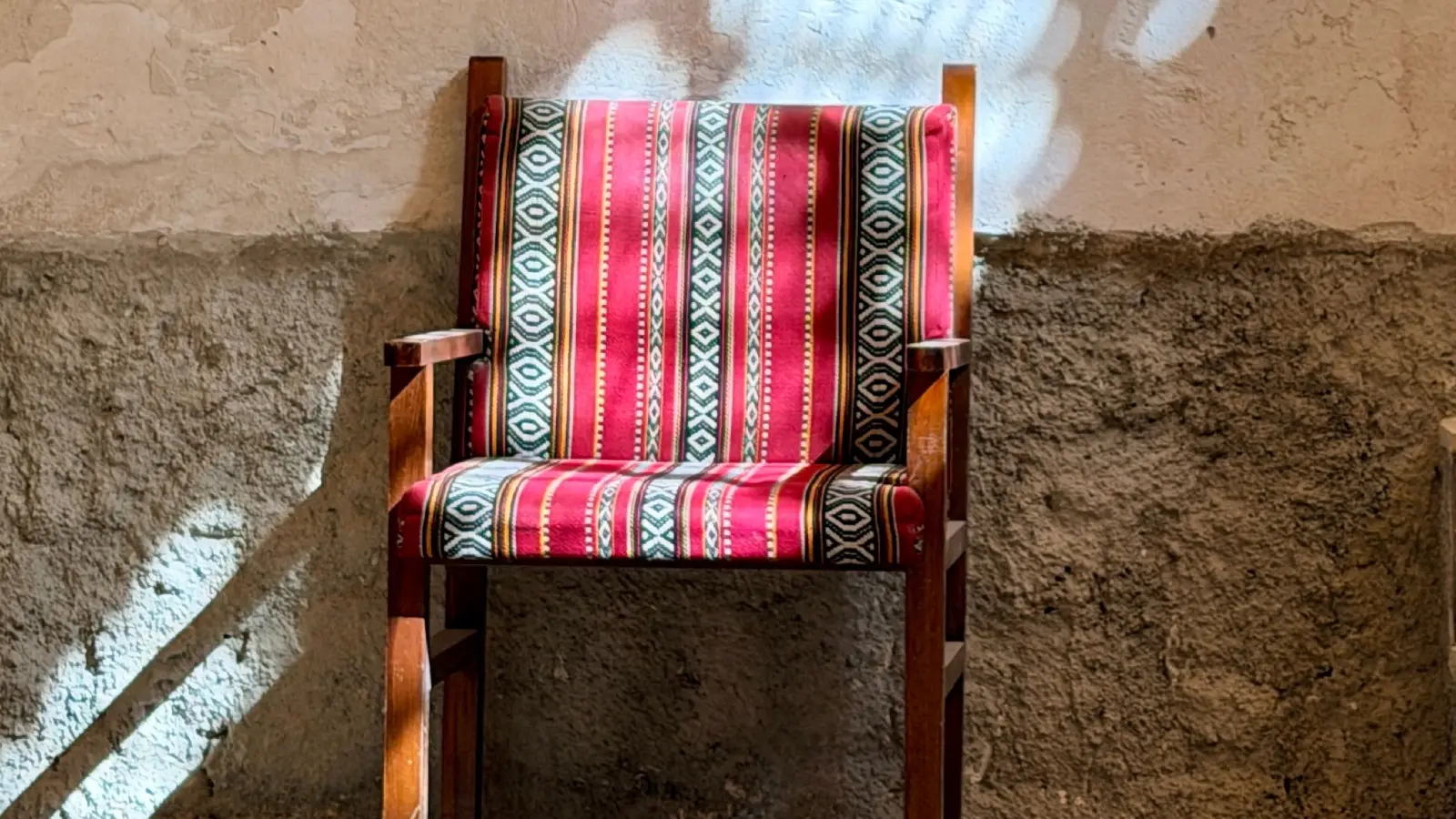
Furniture in the Arab world tells a story that stretches back centuries, shaped by trade routes, climate, religion, and the rhythms of nomadic and settled life. Long before factories and flat-pack designs, furniture in the region was built by hand, often by craftsmen who passed their skills down through generations, refining techniques that still echo […]
Furniture in the Arab world tells a story that stretches back centuries, shaped by trade routes, climate, religion, and the rhythms of nomadic and settled life. Long before factories and flat-pack designs, furniture in the region was built by hand, often by craftsmen who passed their skills down through generations, refining techniques that still echo in the interiors we furnish today.
Early Beginnings: Furniture Built for the Desert
In the earliest periods, furniture in Arabia was minimal by necessity. Bedouin life demanded pieces that were light, portable, and easy to pack onto a camel. Low wooden stools, woven mats, and simple chests carried belongings across the desert, and almost nothing was built that couldn’t be broken down or carried by hand. As trade expanded through the Arabian Peninsula, Mesopotamia, and the Levant, craftsmen began incorporating techniques and materials from Persia, India, and the Mediterranean, gradually shifting from purely nomadic furnishings to pieces suited for settled trading towns and coastal cities.
The Golden Age of Islamic Craftsmanship
During the Islamic Golden Age, furniture making flourished alongside advances in architecture, mathematics, and the arts. Craftsmen developed intricate wood inlay techniques, geometric carving, and mother-of-pearl work that turned functional objects into works of art. Low seating, ornate chests, and carved wooden screens known as mashrabiya became hallmarks of the era, reflecting both religious sensibilities around modesty and privacy, and a deep appreciation for pattern, symmetry, and mathematical precision. Workshops in cities such as Damascus, Baghdad, and Cairo became centers of excellence, producing furniture and architectural woodwork that was traded and copied across the wider region.
Materials of the Region
Local materials shaped design as much as culture did. Palm wood, teak imported through trade with East Africa and India, and locally available stone and metal all found their way into furniture pieces. Textiles—woven wool, silk, and cotton—played an equally important role, since many pieces relied on cushions and drapery rather than heavy upholstery. In coastal trading hubs, merchants brought in exotic woods like rosewood and sandalwood, which local artisans transformed into furniture using techniques refined over generations of practice. The scarcity of quality timber in much of the region meant that wood was treated with real reverence—nothing was wasted, and every plank was worked with care.
Regional Variations Across the Arab World
Furniture traditions were never uniform across the Arab world; they varied significantly by region. In the Levant, furniture often carried Ottoman influences, with elaborately carved wooden panels and inlaid mother-of-pearl work found in wealthier homes. North African furniture, particularly in Morocco and Tunisia, developed its own distinct character, blending Andalusian, Berber, and Islamic influences into brightly painted wood, elaborate zellige-inspired motifs, and leatherwork. In the Gulf, furniture stayed closer to its nomadic roots for longer, with low seating and portable pieces remaining dominant well into the twentieth century, shaped by the practical demands of desert life and seasonal movement between coastal and inland settlements.
Trade Routes and Cross-Cultural Exchange
The Arab world’s position at the crossroads of Africa, Asia, and Europe meant that furniture making was never developed in isolation. Maritime trade routes connecting the Gulf to India and East Africa brought both raw materials and design influences, while overland caravan routes linked the region to Persia and beyond. This constant exchange meant that furniture craftsmen were often working with imported techniques and materials, adapting them to local tastes, climate conditions, and available resources—a pattern of cultural blending that remains visible in the region’s design language today.
A Legacy That Endures
Today, this heritage still shapes furniture design across the Gulf and the wider Arab world. Modern Emirati and wider Arab interiors often reference these traditions—low seating arrangements, carved wooden details, and rich textiles—while blending them with contemporary materials and manufacturing techniques. Designers and homeowners alike continue to draw on centuries-old motifs, whether through a hand-carved cabinet door, a geometric-patterned screen, or a majlis seating arrangement updated for modern living. Understanding this long and layered history helps explain why furniture in the region carries such a strong sense of identity, even in the most contemporary of homes, and why heritage craftsmanship continues to be so highly valued by collectors and designers across the Gulf today.